How you put people at ease
Whether you do it by welcoming, by listening, by lightening the mood, or simply by being unbothered.
A free likeable person test that identifies which of eight kinds of likeable you are rather than scoring you out of ten. Sixteen questions, about four minutes, instant result and no sign-up.
This likeable person test does not rate you out of ten. Everyone is likeable in some particular way, and the questions work out which way is yours: how you make people comfortable, what you notice about them, and what you tend to give.
Your answers are only used to calculate your result. Sign in if you want your results saved to an account.
Whether you do it by welcoming, by listening, by lightening the mood, or simply by being unbothered.
How much of someone's state you notice, and what you tend to remember about them afterwards.
Attention, energy, honesty, reliability, or credit. Everyone leans on one or two of these.
Whether you fill it, work it, hold steady in it, or stay at the edge and let people come to you.
This PopTypes likeable person test looks at four things: how you put people at ease, how much you pick up about them, what you reliably give other people, and how you occupy a room. Those four angles decide which of the eight likeability types fits you. It is written for entertainment and self-reflection, not as a psychological assessment.
Most versions of the likable person test give you a percentage, which quietly assumes there is one correct way to be likeable and ranks you against it. That is not how being liked actually works. The funny friend and the reliable one are liked for completely different reasons, and neither is a weaker version of the other. This test names your kind instead of scoring your amount.
The Warm Host puts people at ease. The Easy Listener is who people confide in. The Spark lifts the room. The Steady One is trusted over years. The Straight Talker is liked for having no hidden layer. The Quiet Magnet draws people without trying. The Champion makes other people look good. The Curious One asks the question nobody else asked. Most people are one clearly and a second one underneath.
Read the strengths first. They describe things you almost certainly do without noticing, which is exactly why nobody has told you about them. The growth notes are written as the cost of a strength rather than a fault, so they tend to be worth sitting with rather than fixing quickly. If a second type also feels true, that is normal and usually accurate.
Most likeability quizzes rank you from low to high. We think people are likeable in different ways, so questions explore how you show warmth, read a room, give to others, and hold attention. The eight results describe your natural charm and one small way to make it go further.
None of these is better than the others. They are different reasons people are glad you are there.

You spot the empty chair, the person who arrived alone, the one who has been standing on the edge of the conversation for a while. Then you do something about it, usually before anyone else has noticed there was anything to notice.
Read this result →
Somewhere along the line you became the person people confess to. Not because you asked, but because you don't flinch, don't rush to fix it, and don't make the other person manage your reaction on top of their own.
Read this result →
Something loosens when you get there. Conversations that were polite become actual, people who were performing stop, and the whole thing gets about twenty percent easier for everyone, including the ones who couldn't tell you why.
Read this result →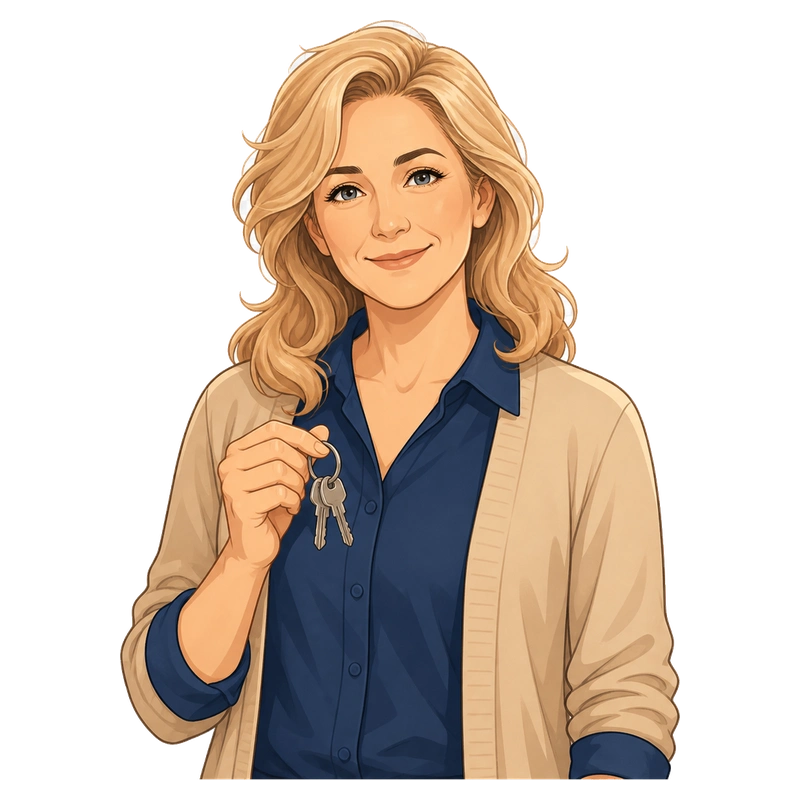
Nothing about how people came to like you was dramatic. There was no single conversation, no moment they'd point at. You just kept turning up, kept doing what you said, and after a few years that added up to something other people can't manufacture quickly.
Read this result →
There's almost no gap between what you think and what you say, which unsettles some people and is exactly why the rest trust you completely. When you say something's fine, it's fine. When you say you like something, you like it. That sounds small until you notice how much energy most people spend decoding each other.
Read this result →
You've never done any of the things people supposedly do to be liked. No working the room, no stories, no effort at all in that direction. And yet people drift toward you at gatherings and you end up in the good conversation without having gone looking for it.
Read this result →
Someone you know does something good and you're already telling other people about it. There's no calculation in this and no small pause where you check what it costs you, which is precisely what makes it land as genuine rather than as networking.
Read this result →
Most conversations stop at the first question. You ask the second one, and then the one after that, and somewhere around there the other person realises you actually want to know, which is a rarer experience than it should be.
Read this result →No, and that is deliberate. Every result is a different kind of likeable rather than a position on a scale, so there is no low score to land on. The growth notes point at the cost of your particular strength, not at a flaw.
Both are correct. Likeable is the more common British spelling and likable the more common American one, and people search for the likeable person test and the likable person test in roughly equal numbers. This is the same test either way.
None by design. All eight types are balanced to come up about equally often.
Yes. Several results, like the Easy Listener and the Quiet Magnet, describe likeable people who don't need to be loud.
You can take the Likeable Person Test for free on PopTypes — no sign-up required, with an instant, shareable result.
This test is for entertainment and general self-reflection only. It is not a psychological, clinical, or professional assessment, and it does not measure your social skills or your worth to other people.
Keep exploring with another free test in a similar area.
Twenty-two questions to find the Miraculous character who matches your personality.
Start test →
Sixteen questions to find the Supernatural character who matches your personality.
Start test →
Sixteen questions to find the Bleach character who shares your personality.
Start test →
Sixteen questions to find the Helluva Boss character who matches your personality.
Start test →
Eight, thirty, or ninety at heart? A playful test of how old your habits and outlook feel.
Start test →
Big loops, tiny print, heavy pressure? Find what the way you write might say about you.
Start test →
Group chat ghost, certified yapper, or soft launcher? Find your internet personality type.
Start test →
Natural, classic, romantic, or edgy? Find the clothing style that already fills your wardrobe.
Start test →Fresh personality tests and character quizzes that just landed on PopTypes.

Sanguine, choleric, melancholic, or phlegmatic? Find your temperament and the blend behind it.
Start test →
Do you cling, pull away, or feel safe? Find your attachment pattern from real relationship moments.
Start test →
Builder, thinker, creator, helper, persuader, or organiser? Get your three-letter Holland Code.
Start test →
Words, time, gifts, help, or touch: rank all five love languages from everyday choices.
Start test →Signing you in…
Save your results and track your test history.
Google sign-in is unavailable right now — use the email code below instead.
No password needed — we'll email you a 6-digit code.
We sent a 6-digit code to
Sign in to keep this result and every test you take.